Celtic Cairns and The Cailleach: Stone, Memory, and the Living Landscape
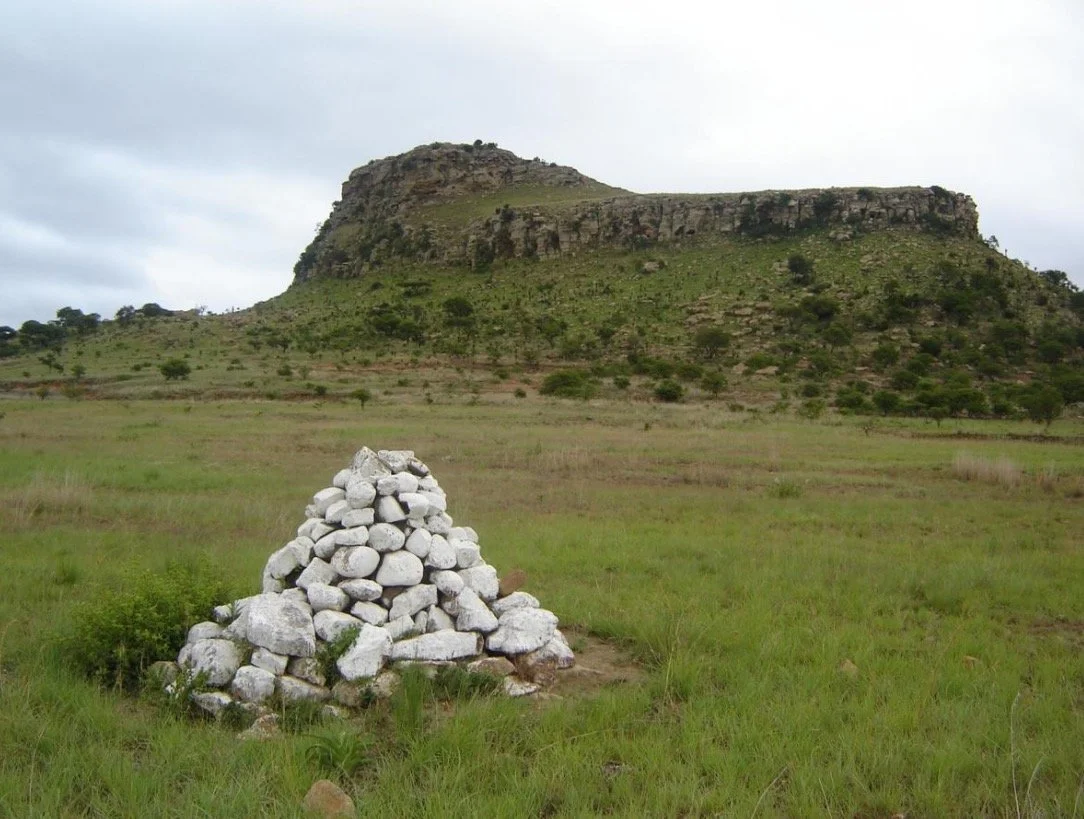
Across the hills, ridges, and high places of Ireland, Scotland, and Wales, cairns rise from the land like quiet gestures of memory. At first glance, they are simple: gathered stones stacked by human hands. But within Celtic landscapes, cairns are far more than markers or monuments—they are intersections of history, myth, and meaning.
When viewed through both archaeological understanding and Gaelic tradition, cairns become something deeper still: places where the human world and the mythic imagination meet in stone.
What are Celtic cairns?
A cairn is a human-made pile or mound of stones, often found on elevated ground, hilltops, or along ancient routes. In Celtic and pre-Celtic contexts, cairns were constructed for many purposes: burial sites, territorial markers, ceremonial monuments, and wayfinding structures across difficult terrain.
Some cairns contain chambers or passageways built within them, while others are simple but intentional piles placed in significant locations. Their placement was rarely arbitrary—cairns often align with horizons, routes, and prominent landscape features.
They are among the oldest surviving forms of human monument in Europe, with some dating back over 4,000–5,000 years.
Cairns in the ancient landscape
Archaeologically, cairns are deeply tied to early expressions of memory and cosmology. Many were built as burial monuments, placing the dead within stone and earth rather than separating them from the landscape.
These structures often reflect a sophisticated awareness of time and environment:
alignment with solar cycles and seasonal markers
placement on liminal terrain (ridge lines, hilltops, passes)
long-term reuse and adaptation across generations
In this sense, cairns were not static monuments. They were active points in a living landscape—places where human presence, memory, and environment converged.
The spiritual landscape of stone
In Celtic worldviews, the land itself was not inert. Hills, springs, stones, and mountains were part of a living, meaningful geography. Cairns existed within this worldview as more than physical markers—they were thresholds.
They often symbolised:
ancestral presence – places of burial and remembrance
liminality – transitions between territories or realms
seasonal awareness – alignment with cycles of light and dark
sacred geography – points of meaning embedded in the land
Even today, the act of adding a stone to a cairn carries echoes of this older symbolic language: a gesture of remembrance, acknowledgement, or quiet participation in place.
The Cailleach: stone, winter, and the shaping of land
Within Gaelic mythology, the landscape itself is shaped and animated by powerful mythic figures. One of the most significant is The Cailleach, a primordial being associated with winter, mountains, and stone.
The Cailleach is often described as an ancient hag or creator-force who forms hills and mountains by carrying or dropping stones across the land. She is not merely a character in stories, but a way of understanding the power of winter, geology, and landscape transformation.
In tradition, she is associated with:
the shaping of mountains and ridges
the harsh, formative energy of winter
high places, exposed terrain, and stone
cycles of dormancy and renewal in the land
She is, in essence, a mythic embodiment of stone and season combined.
Cairns as traces of mythic movement
When cairns are viewed through this lens, they begin to resemble more than human constructions. In folk imagination, they can be understood as echoes or traces of The Cailleach’s presence.
On windswept hills and mountain passes, cairns may feel like:
footprints of a being who carries stone
resting points where stone was set down
markers of passage across the land
thresholds between ordinary and mythic space
Because cairns are made from gathered stone and often placed in exposed, elevated locations, they mirror the imagery associated with The Cailleach herself: movement across terrain, shaping of land, and the accumulation of stone as memory.
Winter, burial, and ancestral stone
Cairns also share symbolic ground with The Cailleach through their association with winter and stillness.
Winter in Gaelic tradition is not only a season of cold, but of:
inward reflection
dormancy and rest
ancestral proximity
reduced boundaries between worlds
Burial cairns, in particular, echo this seasonal symbolism. They place the dead within stone and earth, preserving memory within a landscape that endures through time.
In this way, cairns can be seen as “winter structures” of the land—sites where time slows, memory is held, and transformation is suspended.
The Cailleach, as the personification of winter, becomes the mythic counterpart to this stillness: the force that gathers, preserves, and shapes through stone.
Living cairns and continuing meaning
One of the most remarkable aspects of cairns is that they remain active in cultural memory. Even today, people encounter cairns on hills and trails and sometimes add stones as gestures of reflection or acknowledgement.
This creates continuity between past and present:
ancient builders shaping the first cairns
later generations reinterpreting or reusing them
modern walkers responding through small acts of placement
In this ongoing interaction, cairns become living structures—not because they physically change much, but because meaning continues to accumulate around them.
Working with cairn symbolism today
Engaging with cairns today can be approached in many ways, as long as it is done with respect for heritage sites and natural environments.
Some contemporary ways people relate to cairn symbolism include:
Reflection and grounding – using cairns as focal points for stillness in landscape
Symbolic stone placement – creating small cairns in appropriate natural spaces as personal markers of intention or remembrance
Walking awareness – noticing cairns as guides, thresholds, or points of orientation
Mythic imagination – viewing landscape through stories of shaping forces like The Cailleach
In a Cailleach-informed perspective, these practices are less about ritual correctness and more about perception: seeing the land as layered with story, time, and presence.
A note on respect and preservation
Many ancient cairns are protected archaeological sites. They should not be disturbed, rebuilt, or altered. Their integrity is part of their meaning, connecting present landscapes to deep time.
Respecting cairns as they are ensures that both their historical and mythic dimensions remain accessible for future generations.
Closing reflection
Cairns sit at the meeting point of earth and memory, human hands and geological time. The Cailleach moves through the same terrain in story—not as a literal figure, but as a way of understanding the shaping power of stone, winter, and landscape itself.
Together, they form a shared language:
Stone becomes memory.
Landscape becomes narrative.
And winter becomes presence.
In the quiet gathering of stones on a hilltop, both history and myth remain present—still speaking, still forming, still watching from the high places of the land.